Publications
Irish Section members have published a number of books which are of interest to anyone researching their Huguenot Ancestry in Ireland. Please see below for a short summary and link to these useful publications.

Irish Section members have published a number of books which are of interest to anyone researching their Huguenot Ancestry in Ireland. Please see below for a short summary and link to these useful publications.
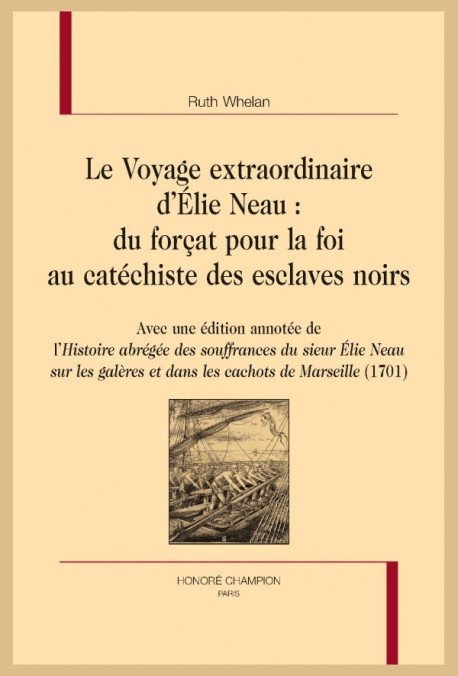
Élie Neau (1662–1722), a Protestant sailor of humble origins from the Saintonge region, is famous on both sides of the Atlantic. He is known in France as a galley slave and prisoner in the Château d’If under Louis XIV, and in the United States as a catechist to black slaves in New York.
In this book, for the first time, Ruth Whelan presents the two sides of this extraordinary life and links them to one another. A new annotated edition of the Histoire abrégée (1701) of Neau’s sufferings is preceded by an in-depth investigation into the construction of the narrative as a story of martyrdom, into its author, Jean Morin, and into the spirituality of the eponymous hero.
This study by Vivien Costello is a genealogical research guide to French Protestant refugee settlers in Ireland, c. 1660–1760. It reassesses Irish Huguenot settlements in the light of new findings and provides a background historical framework. A comprehensive select bibliography is included.
While there is no formal listing of manuscript sources, many key documents are cited in the footnotes. This work covers only French Huguenots; other Protestant Stranger immigrant groups, such as German Palatines and the Swiss watchmakers of New Geneva, are not featured.
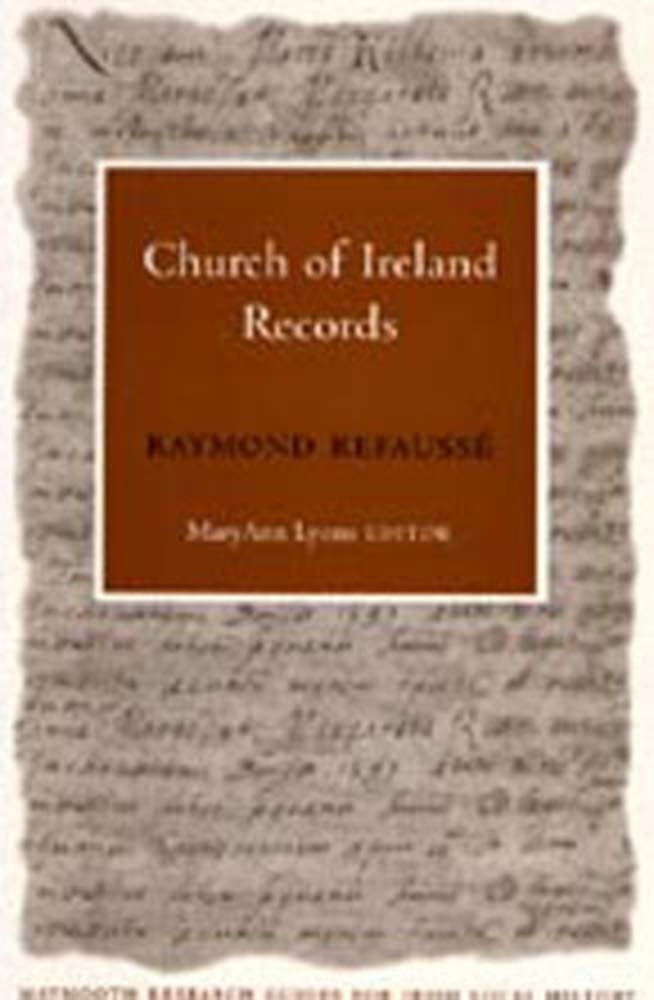
This book is designed as a practical guide for those who wish to access Church of Ireland records held in public repositories throughout the whole of Ireland. Dr Refaussé begins by presenting a concise history of the church in Ireland which evolves into a discussion of surviving early manuscript sources.
Parish registers, vestry records, preachers – books and Episcopal correspondence to records of the Consistoral courts and those of the Board of First Fruits receive particularly detailed coverage. The second section of the book provides detailed practical advice to the researcher.